Desert Cactus Landscape Wind Spinner: A Dynamic Design Asset
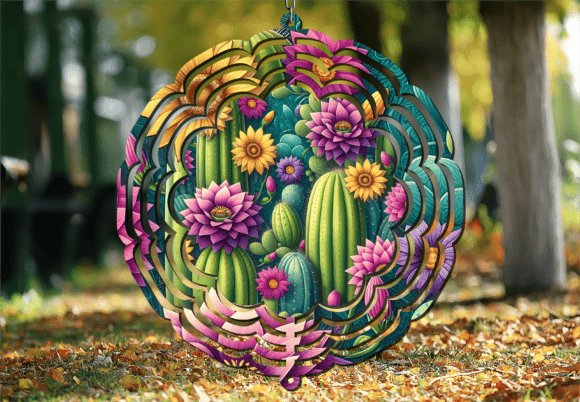
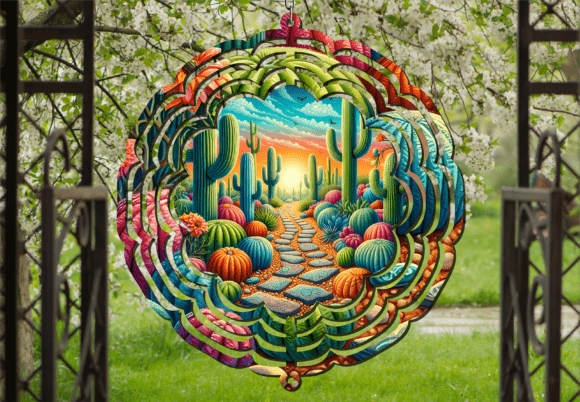
There’s a certain magic in the way a desert landscape captures the eye—the stark beauty of a saguaro silhouette against a gradient sky, the sense of endless space and quiet resilience. Translating that essence into a kinetic piece of art is the core idea behind the Desert Cactus Landscape Wind Spinner. This isn't just a static image; it's a sublimation design engineered for movement, creating a mesmerizing visual effect as it spins in the breeze. The design typically features a meticulously composed scene of iconic desert flora, arranged in a circular format that plays with positive and negative space. When printed and assembled, the interplay of light and shadow through the cutout sections brings the landscape to life.
The personality of this design is one of modern rustic appeal. It blends the organic, timeless shapes of cacti with a clean, graphic sensibility. The style leans towards a display font aesthetic in its visual weight and impact—it's meant to be seen and admired from a distance, much like a well-chosen typeface on a sign. The overall appeal lies in its dual nature: it’s a piece of brand identity for a space, adding character and a touch of the Southwest to patios, gardens, or storefronts, while also functioning as a standalone piece of packaging design for the wind itself, framing the moving air in an artistic context.
Practical Applications Beyond the Garden
While its most obvious use is creating physical wind spinners for outdoor décor, the versatility of this high-resolution PNG file extends far into the digital and commercial realm. For content creators and bloggers, the spinning animation effect can be simulated in video intros or social media graphics, adding a unique, tactile element to a brand’s visual language. Imagine it as a dynamic background for a social media graphics campaign for a travel blog, a sustainable brand, or a local artisan shop. The circular composition is inherently pleasing and works exceptionally well for profile badges, podcast cover art, or as a decorative element in editorial design layouts for magazines or lookbooks with a nature or lifestyle focus.
For entrepreneurs and small business owners, particularly those in the home décor, gift, or custom merchandise space, this design is a premium font equivalent for physical products. It’s a ready-to-use design asset that eliminates the need for expensive custom illustration. You can sublimate it onto metal, license it for use on printed materials, or adapt its elements for a cohesive brand identity. Think of a coffee shop using a static version on their menu boards and a spinning version in their window—the consistency builds recognition. The commercial font licensing here is key; understanding what you can and cannot do with the file for client work or resale is as crucial as knowing the terms for a typeface.
Evaluating Fit and Ensuring Quality
Choosing this design is less about typography in the traditional sense and more about evaluating visual harmony and technical precision. You’re not pairing it with a sans serif font for body text; you’re assessing how its intricate details will reproduce at your intended size. The provided specifications—4167 x 4167 pixels at approximately 13.89 inches—point to a high-resolution & print-ready file, which is non-negotiable for large-format sublimation where pixelation would ruin the effect. Always test print a section at full scale to check the clarity of fine lines, especially in the cactus spines and gradient sky transitions.
Consider the project’s context. For a logo design element, the cactus shapes might be too literal, but for a brand’s decorative asset library, it’s perfect. Its strength is in applications where a sense of place and natural elegance is desired. When using it in a web design context, ensure the file is optimized for fast loading if used as a background. The real-world value is in its specificity; it solves a very particular creative need with professional quality, much like a well-crafted script font solves the need for a personal, handwritten touch. It’s a tool for makers who want to add a distinct, professional piece to their repertoire without starting from scratch.